
Grief is complex and it is also personal.
The pain that comes with loss is hard to bear by yourself.
Psychological experts agree that connections can accelerate the healing process. They can’t erase the pain, but they can certainly help you bear it.
When I experience loss, I go through a journey of emotions. I am not alone in this. People often speak about stages of grief like disbelief, yearning, anger, and acceptance.
The progression through these stages isn’t necessarily linear, These stages are fluid and can overlap, which is entirely natural.
Most of us find that our minds and bodies crave support. There are a few who find grief a journey they perfer by themselves. Either way, it right. Families can offer that social support.
It’s science, not just feelings. Research tells us that social support is vital in these times. It can change how we experience grief and work our way through it.
My Experiences
I’ve found that surrounding myself with positive relationships can be that anchor of hope in the middle of the darkness of grief.
For me, It’s the connections I maintain with loved ones that often offer much-needed support and understanding. Family, friends, and even colleagues can provide a necessary cushion when the loss feels too heavy to carry by myself.
Whether it’s a shoulder to cry on or someone to handle daily tasks, support comes in various forms.
As we move forward, let’s focus on one of the most potent sources of this support: family.
While it may sound manipulative, “leveraging these connections,” your communications group wants to help. They just feel lost in knowing how.
Learning how to allow your family to help you through your time of grief. Don’t push them away because you don’t want to ask for help. It may be that you need just a 5-minute on the phone to ease the moment you are experiencing.
It could also mean you need someone to go to the Doctor with you. Learn to let your support people help you,
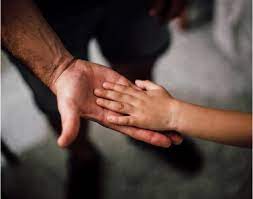
The Healing Power of Your Family During Grief
When loss upends our lives, the family often becomes our frontline of support.
Navigating the choppy waters of grief is no easy feat, and it’s one I wouldn’t recommend doing alone. The network of relatives, with their shared heritage and mutual affection, often acts as an anchor. That layer of protection can provide stability when everything else seems crazy and upside down.
Even within the complexity of family relationships, their impact during times of mourning is significant. Family members not only offer a shoulder to lean on but also assist with the practical aspects of life that can become overwhelming.
From ensuring daily needs are met to handling the multitude of tasks that follow a death, such as funeral arrangements and managing estates, the family can ease the burden considerably.
It’s not just about all that help, though. The emotional sustenance a family provides through a shared history with the deceased creates a space where memories can be celebrated and grief expressed openly.
Collectively recounting stories and revisiting cherished moments with the lost loved one can be an important part of the healing journey.
These aren’t mere assumptions; research corroborates the positive influence of kinship on grief recovery.
Several studies have demonstrated that individuals with social support from their family network experience less stress and better emotional outcomes after a loss.
By leaning on family, the process of rebuilding life after the loss of a loved one is supported, allowing for healing and adjusting.
Compassionate Communication: What You Can Say and Do
Loss is a heavy burden. Often, words fail us when we try to offer comfort to a grieving family member.
Yet, speaking from the heart can make a significant difference. Understanding how to communicate compassionately is helpful.
Here are some guidelines for empathetic communication that can help ease a loved one’s pain.
Knowing the right things to say isn’t about a perfect script; it’s about authenticity and care.
You might find phrases like ‘I’m here for you,’ ‘Your feelings are valid,’ or ‘I remember when…’ all simple, yet profound ways of showing support.
Acknowledge the loss by saying ‘I can’t imagine how tough this is for you, but I am so sorry for your loss’.
It’s also important to avoid saying things that might be misconstrued or diminish the person’s experience.
Phrases like ‘They’re in a better place,’ or ‘Time heals all wounds,’ can often come across as dismissive.
Instead, focus on listening. Ask open-ended questions like ‘Would you like to share any memories about your loved one?’ This can invite the bereaved to express themselves in a way that feels right for them.
Being an active listener is about more than silence while someone else speaks. It’s about giving them your full attention, acknowledging their grief, and validating their emotions without judgment. It is a powerful way to show you care.
The strength of family bonds can become evident after loss. Communication is the bridge to these connections., These communications will provide support but also in building resilience that the bereaved will need, for the days to come.
Build Stronger Bonds in the Wake of Loss
When we face the unrelenting times of grief, the strength in our family bonds can serve as an anchor, grounding us as we work our way through the chaos.
Even though the loss of a loved one might test these ties, it often also presents a unique opportunity to bring us closer, creating an even stronger family unit.
Some people can maintain a connection with the departed by establishing new family traditions. Traditions that honor their memory.
Whether it’s a special yearly gathering, a one-time event, participating in their favorite hobby, or volunteering for a cause they were passionate about, these acts can make a difference when you are suffering a loss.
These events allow family members to feel close to the one they’ve lost while finding a collective path forward.
Sami’s take on “Role of Family in the Grieving Process”
Beyond the confines of the household, many find additional support through bereavement groups and counseling. These resources can complement the support net your family provides.
Joining a shared space with others who can relate to the depth of your loss is helpful for some. Therapists who specialize in grief can help families navigate the complex emotions and conflicts that may arise.
It’s crucial to acknowledge that some families might struggle to reconnect after a loss.
In these instances, it’s important to seek professional help. A mediator or grief counselor can assist in addressing unresolved issues and encouraging a spirit of understanding and reconciliation.
Finding light in the shadow of grief is no easy task.
However, with each small step taken together as a family, the path can become less daunting. Remember, it’s the warmth and support you give and receive that creates the ties of a resilient family,
It is a give-and-take situation, and we will benefit from giving or receiving. So will our family communications.
Have you experienced the loss of a loved one that required help beyond family and time? Time is different for everyone. There is no wrong way to grieve, but there are helpful and unhelpful ways of getting through this situation those in grief find themselves.
Watch for grief in your family communication circle, and be as supportive as possible.
Please leave your question of comment below,
Thank you,
Sami